Advocating for Climate and Human Rights
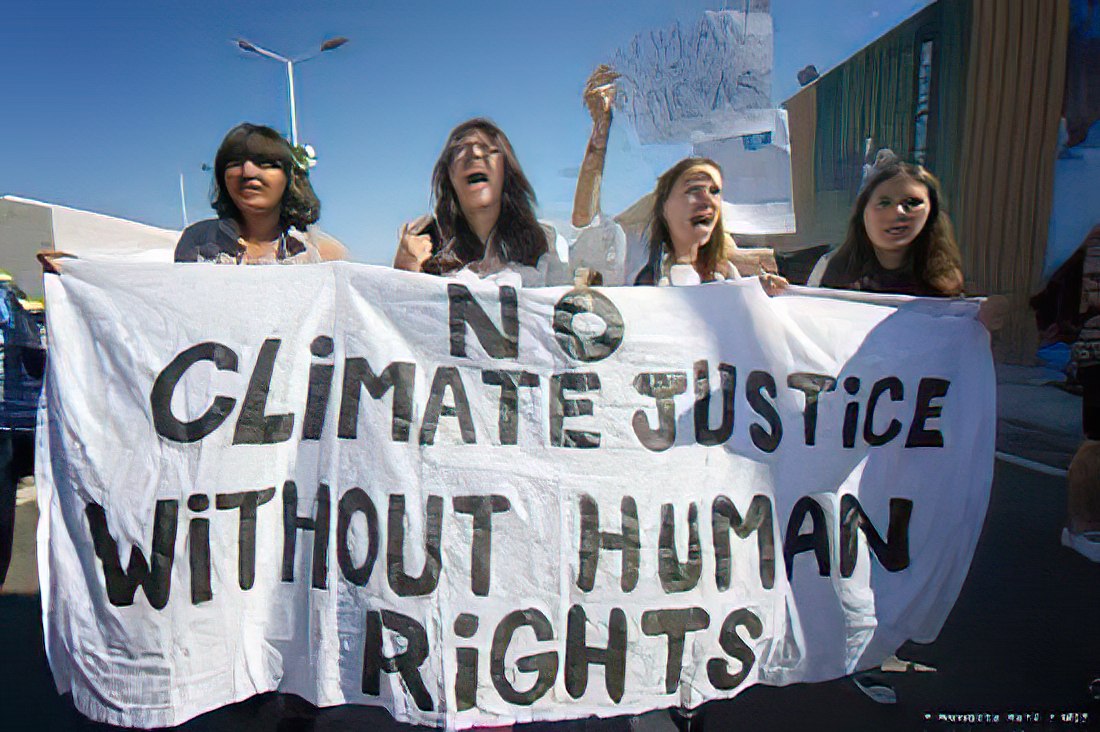
Climate change is not just an environmental crisis—it is one of the most pressing human rights issues of our time. Across the world, communities are facing rising sea levels, extreme weather, forced displacement, and food insecurity, all of which disproportionately affect the most vulnerable populations. The intersection of climate justice and human rights is no longer theoretical—it is visible, urgent, and global.
The banner in the image sends a clear message: “No Climate Justice Without Human Rights.” This encapsulates the reality that solving the climate crisis requires more than emissions targets; it demands a commitment to fairness, equity, and dignity. Indigenous peoples, small island nations, women, children, and marginalized groups often bear the brunt of environmental degradation while contributing the least to its causes.
International climate agreements like the Paris Accord increasingly acknowledge the importance of human rights in climate policy. However, the challenge remains in implementation. Many governments fail to protect environmental defenders, and in some cases, suppress activism altogether. Land rights, access to clean water, and safe housing are fundamental human rights that are routinely violated under the pressure of environmental stress.
Advocating for climate and human rights requires solidarity across borders and sectors. Legal frameworks, youth-led movements, and civil society must converge to pressure decision-makers to act decisively. Education, accountability, and equitable investment are tools not only for climate resilience but also for justice.
As we confront the climate crisis, we must remember that every policy and action must be rooted in respect for human rights. Without this foundation, we risk deepening the injustices we seek to overcome. The path to a livable planet is also the path to a just world.