International Collaboration at the Human Rights Council
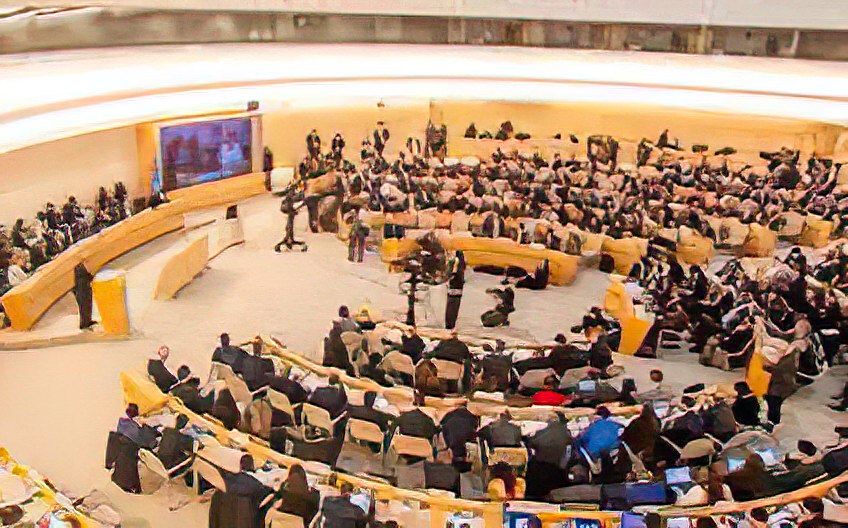
A moment inside the United Nations Human Rights Council — an international forum where representatives of countries around the world gather to discuss, debate, and take action on some of the most pressing human rights issues of our time. While this scene may appear as just another bureaucratic assembly, it is, in fact, a symbol of a collective global commitment: the pursuit of justice and dignity for all.
"International Collaboration at the Human Rights Council" encapsulates one of the most vital mechanisms available to humanity in the face of escalating conflict, authoritarianism, and humanitarian crises. In a world where wars ravage nations, minorities face persecution, and freedoms are routinely violated, the Council stands as a platform where voices can be raised on behalf of the silenced.
Founded in 2006 to replace the former Commission on Human Rights, the UNHRC was created with the goal of strengthening the promotion and protection of human rights globally. It operates through a process of peer review (the Universal Periodic Review), thematic resolutions, fact-finding missions, and special rapporteurs who investigate and report on violations from Syria to Myanmar to Eritrea and beyond.
The very existence of this Council reflects a profound understanding: that human rights are not the internal affairs of sovereign states alone—they are the shared concern of all humanity. Violations in one country affect the credibility and moral standing of all, and it is only through international cooperation that solutions can be pursued.
The Council is not without its flaws. It is often criticized for political bias, inconsistent action, and for including member states with poor human rights records. Yet despite these challenges, it remains a crucial forum where NGOs, victims, and human rights defenders can bring attention to injustices. Its sessions are one of the few places where the voiceless find a platform, and where powerful states are held to account through public scrutiny and global pressure.
In the context of modern-day conflicts—from the Israeli-Palestinian crisis, the civil war in Sudan, repression in Iran, or the crackdown on dissent in Hong Kong—the Council plays a dual role: documenting abuses and advocating for preventative diplomacy. Even when resolutions are non-binding, they carry moral weight and serve as stepping stones toward international accountability.
Ultimately, the image is a reminder that global peace, justice, and equality cannot be achieved in isolation. No nation can claim to uphold human rights within its borders while ignoring atrocities beyond them. The Council’s work represents a collective conscience and the belief that despite division and ideology, there remains a shared responsibility to protect the vulnerable and uphold universal values.