Raising Hands for Global Unity
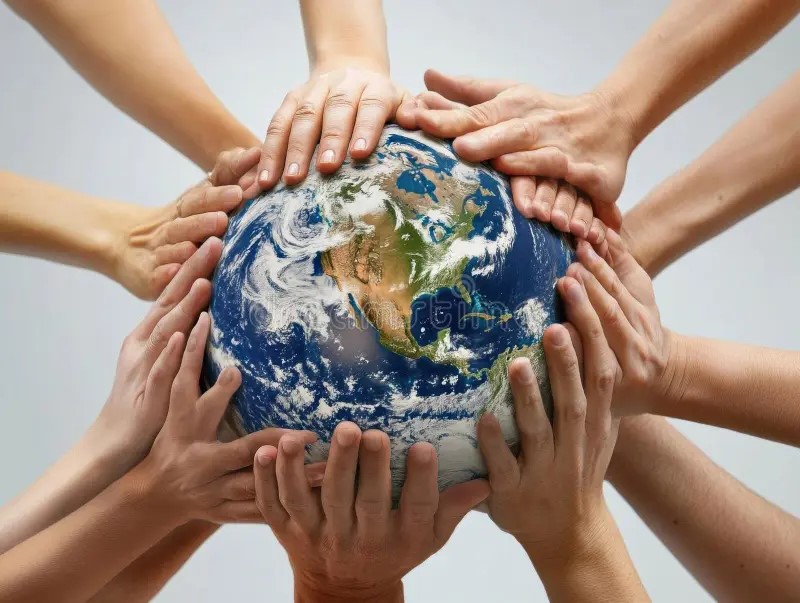
The image of hands from different individuals cradling the Earth is a powerful representation of a hopeful truth: that humanity's strength lies in unity. It is also a reminder of what’s at stake when global conflicts fracture this unity, and why the collective commitment to human rights is essential for building a more just and peaceful world.
"Raising Hands for Global Unity" is not merely a poetic phrase—it is a global imperative. Around the world, conflicts rooted in ethnicity, religion, race, and politics have divided nations, displaced millions, and torn families apart. From the war-torn landscapes of Ukraine and Gaza to long-standing injustices in Myanmar and the Sahel, the consequences of division are etched into the lives of those most vulnerable.
At the heart of these conflicts lies the violation of human rights: the denial of dignity, equality, and justice. Yet, amid the violence, grassroots movements, international coalitions, and global citizens raise their voices—and their hands—not to fight, but to connect. Whether through peacebuilding, humanitarian aid, or policy reform, these raised hands work together to hold the world steady.
Unity does not mean uniformity. It means solidarity in diversity—a shared belief that all people, regardless of origin or identity, deserve equal rights and protection. The Universal Declaration of Human Rights, adopted by the United Nations in 1948, enshrines this vision, yet it requires ongoing vigilance and cooperation to turn that vision into reality.
In an interconnected world, no conflict is isolated. The pain of the oppressed echoes across borders. Climate crises, refugee flows, digital surveillance, and political repression demand a coordinated global response. Human rights defenders, educators, journalists, healthcare workers, and ordinary citizens all play a part in resisting injustice and promoting unity.
Education, dialogue, and cultural exchange are essential to overcoming hate and ignorance. Institutions like the UN Human Rights Council, the International Criminal Court, and local truth and reconciliation commissions serve as mechanisms for justice and accountability—but they only work when backed by global resolve.
This image symbolizes a choice: to let our differences divide us, or to use them to enrich a shared vision of peace. The hands remind us that global unity is not passive—it is active. It requires compassion, courage, and cooperation. As individuals, communities, and nations, we must keep raising our hands not in conquest, but in care—for the planet, for each other, and for generations to come.